

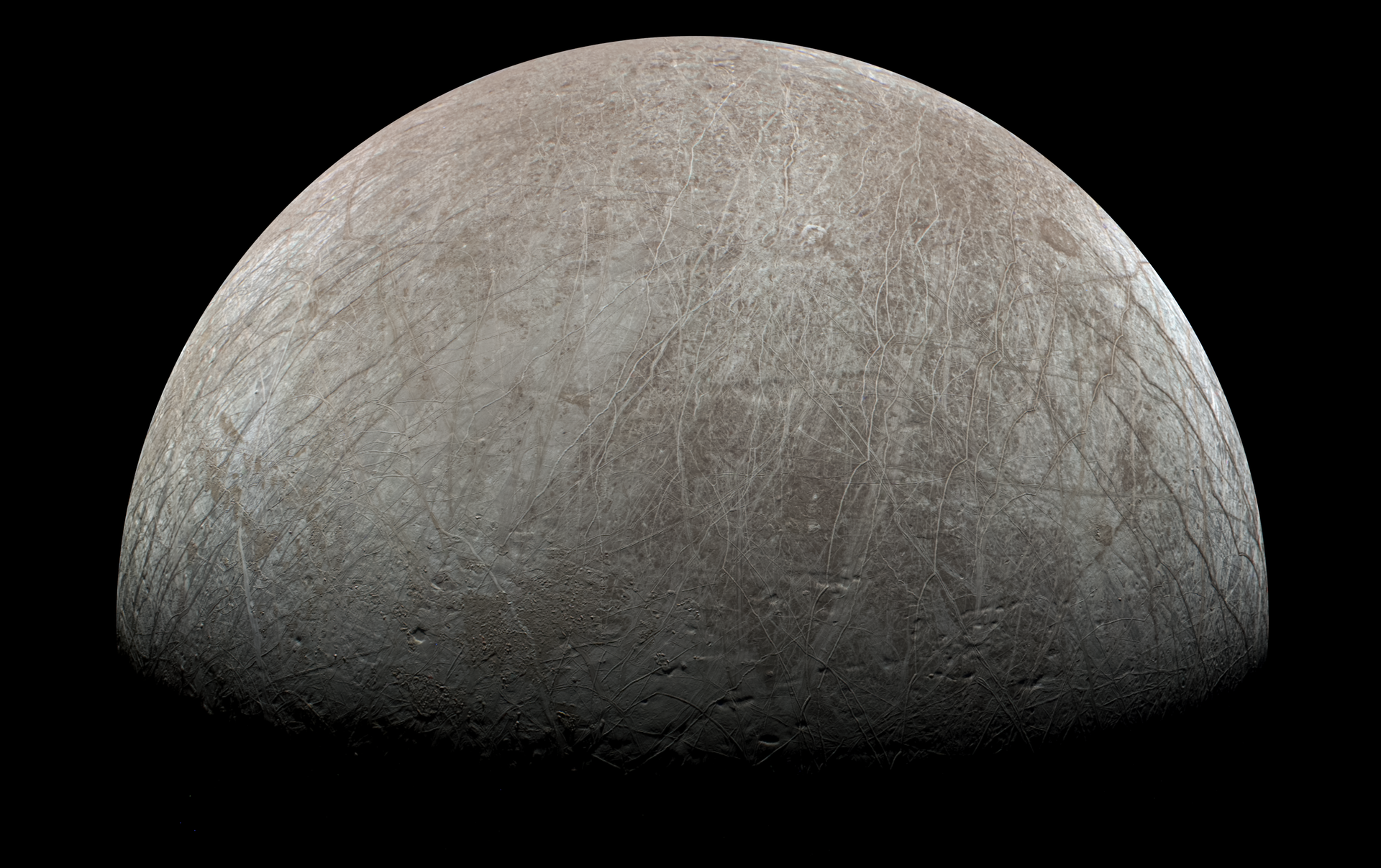
Europa, Jupiter’s enigmatic moon, has long captivated scientists with its vast subsurface ocean hidden beneath a thick ice crust. Now, NASA has announced preliminary evidence pointing to the possible presence of microbial life, a discovery that could redefine our understanding of life beyond Earth.
Data from orbiters, spectrometers, and magnetometers suggest chemical signatures and environmental conditions consistent with microbial activity. While not definitive proof, the findings indicate the ocean beneath Europa’s ice may possess the necessary energy sources, salinity, and nutrients to support life.
“This is one of the most exciting moments in planetary science,” says Dr. Miguel Serrano, astrobiologist at NASA’s Jet Propulsion Laboratory. “Europa’s ocean could be a living system, and we now have compelling reasons to explore it directly.”
Future missions, such as Europa Clipper and potential landers, aim to probe the ice crust, analyze surface material, and search for biological markers. Scientists are developing robotic and sampling technologies capable of operating in extreme conditions to maximize the chances of detecting life safely.
The implications of discovering extraterrestrial microorganisms are profound. Such a finding would not only answer fundamental questions about the prevalence of life in the universe but also influence planetary protection protocols, space exploration priorities, and our understanding of Earth’s own biosphere.
As the scientific community anticipates the next wave of missions, Europa remains a tantalizing frontier, offering the possibility that life exists far beyond our planet — hidden beneath an icy shell, waiting to be discovered.