

A team of astronomers has reported the detection of a mysterious, rhythmic radio signal emanating from the region of Saturn’s outer rings — a pulse so faint that it initially appeared indistinguishable from background noise. Yet after months of analysis, the researchers concluded that the signal was both real and persistent, raising questions about long-held assumptions regarding the magnetic environments of giant planets.
The findings, published this week in The Astrophysical Journal Letters, describe a repeating pattern occurring roughly every 11 hours — closely matching Saturn’s rotational period, but not perfectly synchronized with it. According to Dr. Leila Moreno, the study’s lead author from the European Space Research Institute, that subtle mismatch could be the key to understanding a previously unseen electromagnetic process at work within the planet’s vast system of rings.
“We’ve long known that Saturn’s magnetosphere interacts dynamically with its rings and moons,” Moreno explained. “But this periodic, coherent signal suggests there may be localized currents or plasma waves modulated by something we haven’t yet identified — possibly small bodies embedded within the rings themselves.”
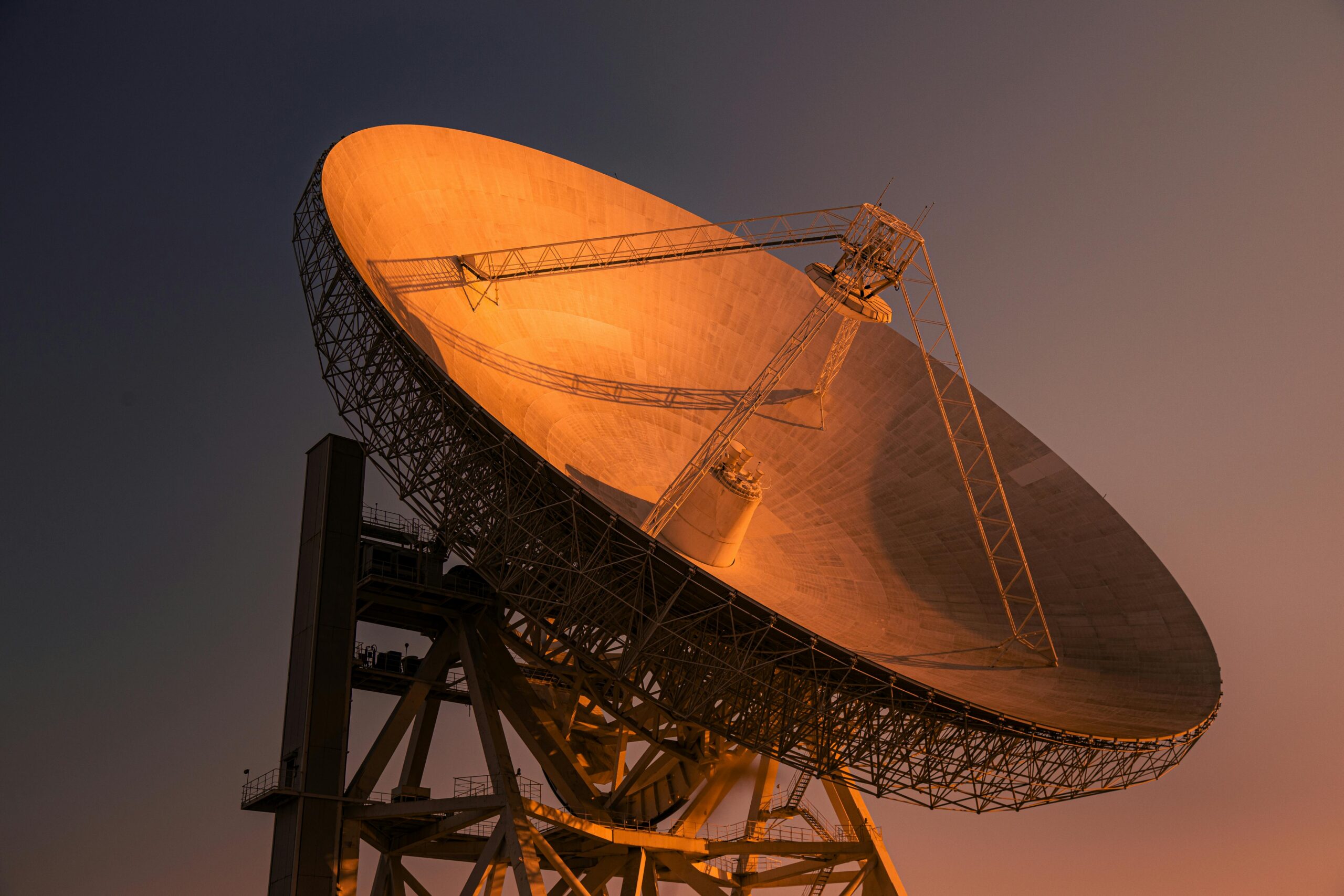
The data originated from the Deep Space Array Network, a series of highly sensitive radio telescopes operating across three continents. Over several months, the array recorded a faint oscillation at low radio frequencies, distinct from the usual cosmic background and solar wind interference. The signal’s stability across different observation points strengthened the team’s confidence that it was not the product of instrumental error.
If confirmed, the discovery could challenge existing theories about how charged particles behave near dense ring systems. Current models assume that most electromagnetic emissions from such regions arise from interactions between a planet’s magnetic field and its ionosphere. However, the newly observed frequency appears to originate well beyond the ionospheric boundary — suggesting an alternative energy source.
One hypothesis proposed by Moreno’s team involves “dust-plasma coupling,” a process in which charged dust grains in the rings influence magnetic field oscillations, producing low-level radio emissions. Another, more speculative idea posits that the signal could be generated by interactions between ring material and previously undetected micro-moons orbiting within the gaps of the outer rings.
“If small moonlets are modulating magnetic waves, it could explain why the signal repeats yet drifts slightly with time,” said Dr. Alan Price, a planetary physicist at MIT not involved with the study. “It would be the first clear evidence of magnetospheric resonance driven by solid bodies — a completely new mechanism in our understanding of ring dynamics.”
The researchers emphasize caution, noting that the signal remains at the edge of detectability. They have released their raw data publicly to encourage independent verification, calling for coordinated follow-up observations using both radio and infrared instruments. NASA’s James Webb Space Telescope and the upcoming Europa Clipper mission are among the platforms capable of contributing valuable data.
If future observations confirm the periodic emission, the implications could extend far beyond Saturn. Similar ring systems exist around other gas giants — and even some exoplanets. Understanding how magnetic fields and particulate matter interact in these environments could refine broader models of planetary evolution and magnetospheric behavior across the universe.
For now, the faint cosmic heartbeat from Saturn’s outskirts serves as a reminder that even in a solar system we’ve studied for centuries, nature still hides subtle patterns waiting to be heard.