

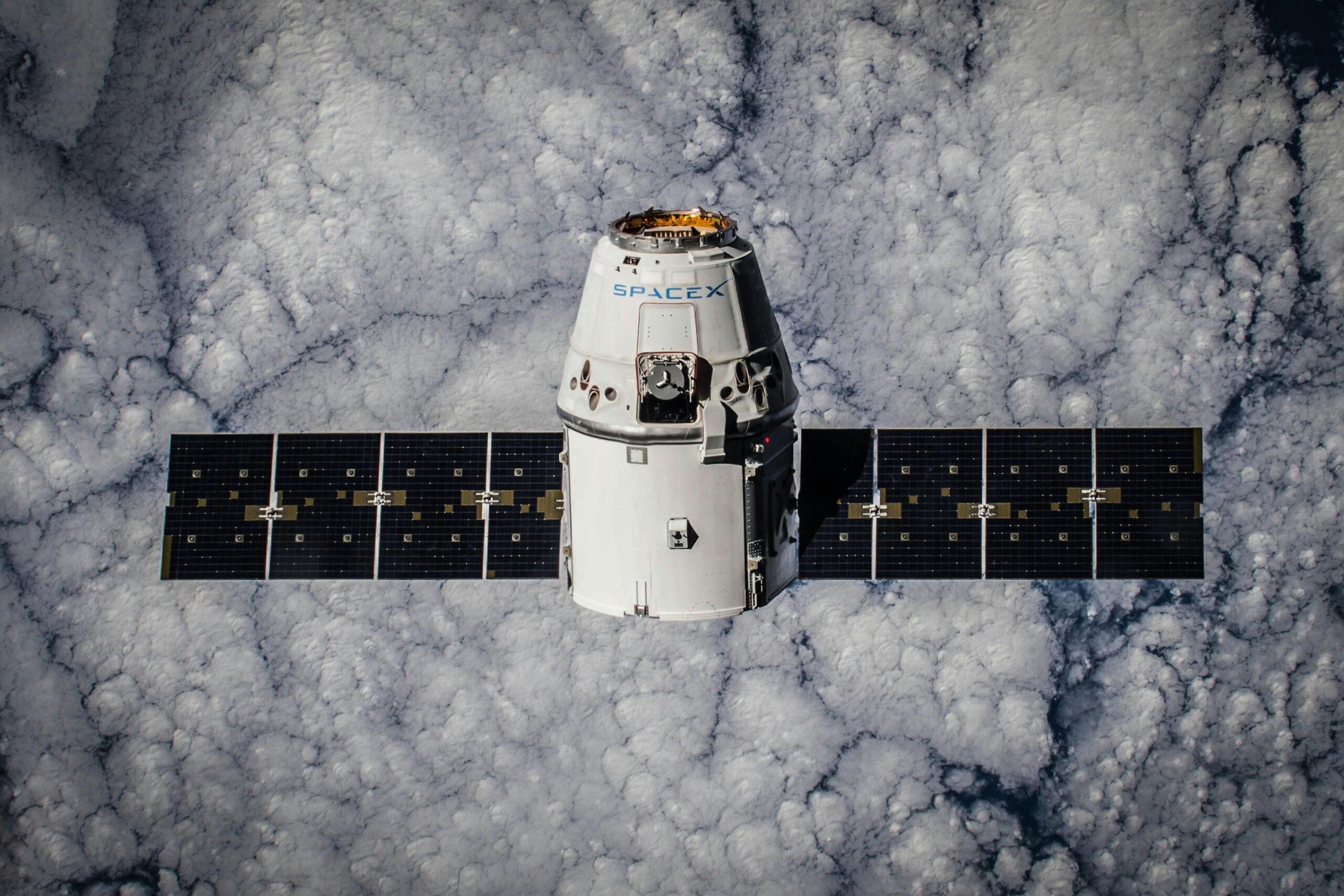
Once the exclusive domain of government agencies, space stations are now attracting private investment at an unprecedented scale. Companies from the United States, Europe, and Asia are planning orbital platforms that promise scientific research, industrial manufacturing, and even space tourism.
The shift toward commercialization reflects both technological maturity and growing market confidence. Miniaturized life-support systems, reusable rockets, and modular station designs have made orbital operations more feasible and cost-effective. “We’re witnessing the dawn of a private space economy,” says Dr. Elena Martens, aerospace strategist at the International Space Policy Institute. “Companies are no longer just servicing government contracts; they are creating new business models in orbit.”
Potential applications are diverse. Pharmaceutical firms see the microgravity environment as ideal for drug development and material science, while tech companies are exploring in-orbit data centers. Meanwhile, the luxury tourism market is beginning to take shape, with plans for orbital hotels offering short-term stays at hundreds of kilometers above Earth.
Yet, private space stations raise regulatory and safety questions. Orbital traffic management, environmental sustainability, and liability in the event of accidents must be addressed. International treaties governing outer space were designed for state actors, not commercial enterprises, prompting calls for updated legal frameworks.
Investment is surging, with billion-dollar funding rounds announced for multiple start-ups. Analysts predict that within the next decade, private orbital habitats could rival government-run stations in capability, fundamentally altering human access to low-Earth orbit.
“The possibilities are extraordinary,” Martens concludes, “but success will depend on balancing innovation, safety, and international cooperation.” As private space stations transition from concept to reality, humanity may be entering a new chapter in its orbital endeavors.
Dark matter, the invisible material thought to constitute roughly 27% of the universe, has eluded detection for decades. Yet recent experiments are offering the most compelling clues yet, reigniting hopes that scientists may soon directly observe this mysterious component of the cosmos.
Teams at underground laboratories, space observatories, and particle colliders are refining techniques to detect weakly interacting massive particles (WIMPs), axions, and other candidates. Advanced sensors, ultra-sensitive detectors, and innovative shielding methods are reducing background noise and increasing the likelihood of capturing elusive interactions.
“The evidence is still indirect,” notes Dr. Amir Khoury, a particle physicist at the International Dark Matter Consortium. “But multiple experiments are converging on anomalies that could point to the presence of dark matter. It’s an exciting moment in fundamental physics.”
Confirming dark matter would have profound implications for cosmology, astrophysics, and our understanding of the universe’s formation and evolution. Models of galaxy formation, gravitational dynamics, and cosmic structure all depend on its properties, making detection a priority for decades of research.
As experimental precision improves, scientists are cautiously optimistic. While definitive proof may still be a few years away, the hunt illustrates human ingenuity in probing the unknown. The universe may be on the verge of revealing one of its most enduring secrets, bridging theory and observation in ways previously thought impossible.